Your finance team called. The cloud bill is up 90% year-over-year. AI inference is the line item that ate the budget. And nobody can tell them why — only that it's growing fast and the engineering team needs "more compute."
This is the FinOps story of 2026. According to the State of FinOps 2026 report, 98% of practitioners now manage AI spend — and most organizations overspend on AI workloads by four to five times their original budget. AI has displaced traditional cloud optimization and sustainability as the dominant topic on the FinOps conference floor. "Tokenomics" and cost-per-inference are now the keynote stage.
If you're a CTO or VP Engineering with a budget conversation coming up, this is what you need to know — and what to do about it before the next quarterly review.
Why AI Inference Spend Behaves Differently
Traditional cloud cost optimization is a solved problem. Reserved instances, autoscaling, rightsizing, spot pricing, and committed-use discounts cut bills predictably. The toolchain is mature, the FinOps discipline is understood, and most engineering teams know what knobs to turn.
AI inference breaks that playbook for three reasons:
- Cost is generated by usage, not provisioning. A developer experimenting with a fine-tuned model in a sandbox can generate costs in hours that would have taken weeks to accumulate on traditional compute. There's no instance to rightsize — every token is a billing event.
- Cost is non-linear with task complexity. A "make the agent smarter" request might double the average call cost overnight. The optimization isn't an infrastructure decision — it's a workflow decision made by application developers.
- Cost attribution is opaque. Traditional cloud bills tag costs to services, environments, and teams. AI inference costs hide in a single OpenAI or Anthropic invoice that lumps everything together. Identifying which feature or which user drove the spend requires custom telemetry most teams haven't built.
Industry analysts estimate that 55–80% of enterprise AI GPU spend now goes to inference, not training. Inference is the cost center now — and most organizations are still optimizing the wrong thing.
The Three Levers That Actually Cut Inference Costs
Lever 1: Model Routing
This is the single biggest lever in 2026. Most production calls don't need flagship-tier reasoning. By routing simple calls to cheaper models (Gemini 3.5 Flash, GPT-5.5 Instant) and reserving flagship models (Claude Opus 4.8, GPT-5.5 Pro) for high-value reasoning, organizations typically cut inference spend 40–60% while improving overall task completion rates.
Practical implementation: a thin routing layer (LiteLLM, OpenRouter, or your own abstraction) classifies each call by complexity and sends it to the appropriate model. Intent classification, tool selection, and bulk summarization all go to Flash-tier models. Multi-step reasoning and final response generation go to flagship tiers.
Lever 2: Prompt and Context Compression
You pay for input tokens. Most production prompts are 3–10× larger than they need to be:
- RAG pipelines retrieve too many chunks, padding context with low-value content
- System prompts accumulate cruft over time as teams add "just in case" instructions
- Few-shot examples linger after the model can handle the task zero-shot
- Tool definitions include every conceivable tool when only 2–3 are relevant per call
A 30% reduction in average prompt size translates directly to a 30% reduction in input token spend. The work to find and remove the excess is one of the highest-ROI engineering investments in 2026.
Lever 3: Caching at Every Layer
All three frontier providers now offer prompt caching with significant discounts on cached tokens (Anthropic: 90% off; OpenAI: 50% off; Gemini: 75% off). Static parts of your prompts — system instructions, tool definitions, retrieval context for high-traffic queries — should be cached aggressively.
Beyond provider caching, application-level caching matters too:
- Response caching for deterministic queries (FAQ, status lookups, classification calls)
- Embedding caching for repeated retrieval queries
- Reasoning trace caching for multi-step agent workflows where intermediate steps recur
The Tokenomics Framework
Track cost per business outcome, not cost per token or cost per call. The right metric is your unit economic — the per-transaction, per-user, or per-resolved-ticket cost that lets you assess whether the AI feature is paying for itself.
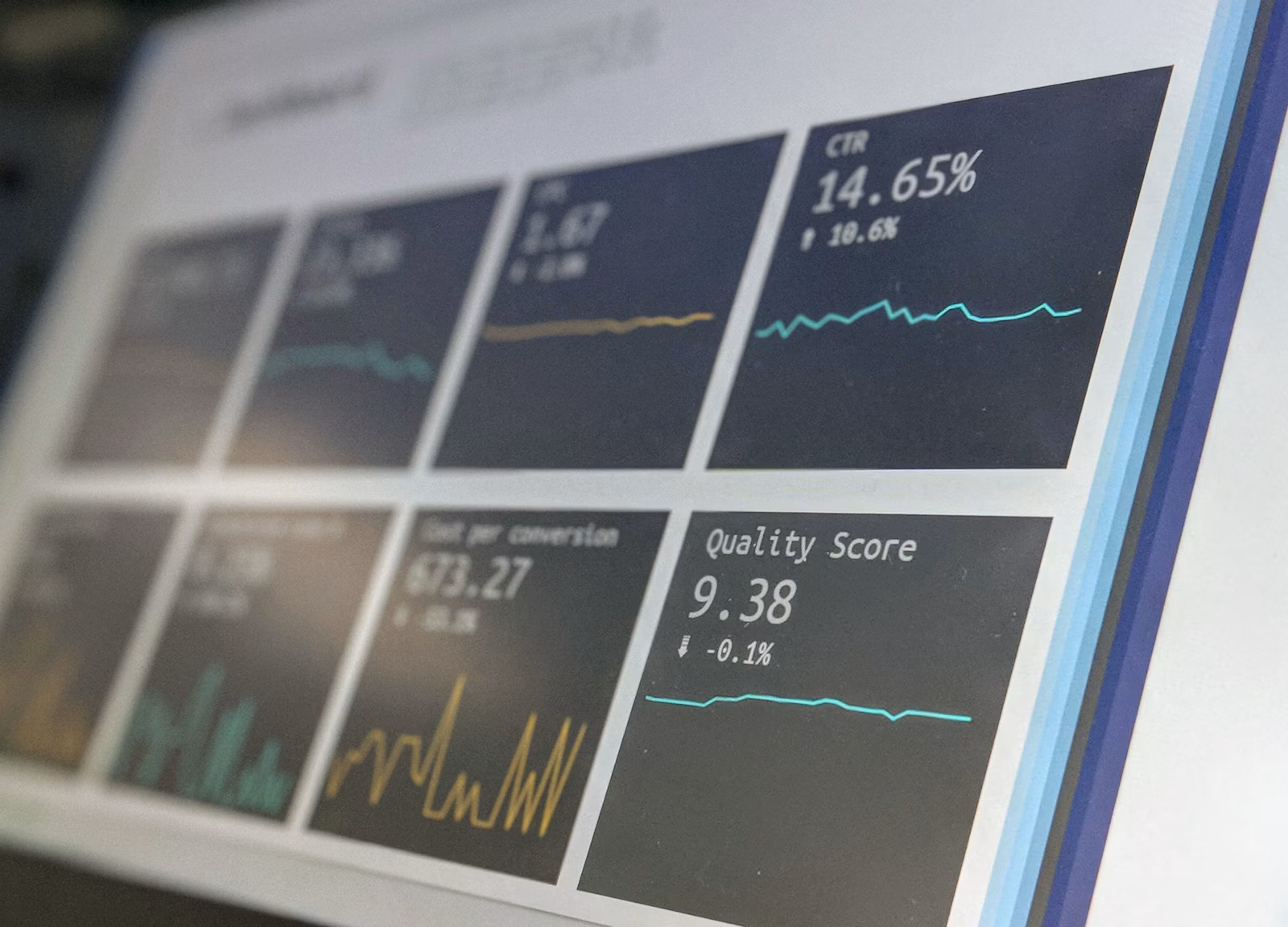
Build a dashboard that shows:
- Cost per AI-generated response (with breakdown by model)
- Cost per resolved support ticket (for support agents)
- Cost per generated lead (for sales agents)
- Cost per processed document (for ingestion agents)
- Margin contribution of AI features to gross profit
Most engineering teams don't have this. Building it takes a sprint or two and immediately unlocks better cost conversations with finance and business stakeholders.
The Sandbox Spend Trap
A pattern we see repeatedly: developers run unbounded experiments in sandbox environments — fine-tuning runs that consume tens of thousands of dollars in a weekend, batch jobs left running, evaluation harnesses re-executing on every commit. Most of this spend produces no business value, and most of it is invisible to engineering leadership until the monthly bill arrives.
Practical controls:
- Per-developer monthly spend caps with hard cutoffs
- Real-time alerting on cost anomalies (spending more than 2× the rolling 7-day average)
- Mandatory cost estimates on PRs that touch AI inference paths
- Sandbox tier with smaller models (Gemini Flash, GPT-5.5 Instant) by default
When to Move to Self-Hosted Inference
For most workloads, managed APIs are the right answer. The economics shift when:
- Volume crosses ~1B tokens/month sustained on a workload that can use a smaller (open-source) model
- Data residency or sovereignty requirements prevent SaaS APIs
- Latency requirements exceed what cross-cloud API calls deliver
- Workload is highly predictable — fluctuating workloads do better on serverless APIs
If you cross any of these thresholds, the GPU economics may favor self-hosting on dedicated infrastructure — but the engineering overhead is meaningful (model serving, observability, autoscaling, security). The crossover point in 2026 is roughly $500K/year in API spend on a single workload. Below that, managed wins on TCO.
The FinOps for AI Discipline
The FinOps Foundation formalized "FinOps for AI" as a discrete workgroup in 2026 with its own playbook. The mature practices look like:
- Per-feature cost telemetry — every AI feature has a cost dashboard owned by its product team
- Cost-of-goods-sold modeling — finance can attribute AI spend to revenue lines
- Per-customer cost tracking in B2B SaaS — preventing high-cost customers from eroding margin
- Monthly capability/cost review — engineering reviews model and routing decisions monthly, not annually
- Budget governance — soft caps with engineering review, hard caps with leadership approval, automated cutoffs with paging
What to Do This Month
- Get visibility. If you can't see cost per feature, per user, or per request, that's the first thing to build. You can't optimize what you can't measure.
- Audit your top 5 highest-spend AI features. Find the routing inefficiencies. Most teams discover at least one feature using a flagship model for work that a Flash-tier model handles equally well.
- Implement prompt caching where you have static prompt content. This is one of the easiest wins available — minimal engineering work for substantial savings.
- Tighten sandbox controls. Per-developer caps, hard cutoffs, anomaly alerts. The sandbox is where surprise bills live.
- Build the unit economic dashboard. Cost per resolved ticket, per generated response, per processed document. This is the conversation the CFO actually wants to have.
The Bottom Line
AI inference spend is doubling for many organizations year-over-year. That's not a problem if it's driving revenue and margin. It's a serious problem if nobody can attribute the spend to outcomes. The organizations that win in 2026 are the ones who treat AI cost as a first-class engineering discipline — measured, attributed, optimized, and reviewed monthly.
The good news: the levers are well understood, the tooling is improving fast, and the ROI of getting this right is among the highest available to engineering leaders today. The bad news: nobody's coming to do it for you.
Need Help Building the FinOps for AI Practice?
Techglock partners with engineering and finance leadership to build cost telemetry, optimize multi-model architectures, and instrument AI features with the unit economics dashboards executives expect in 2026. Talk to our team about your AI cost review.